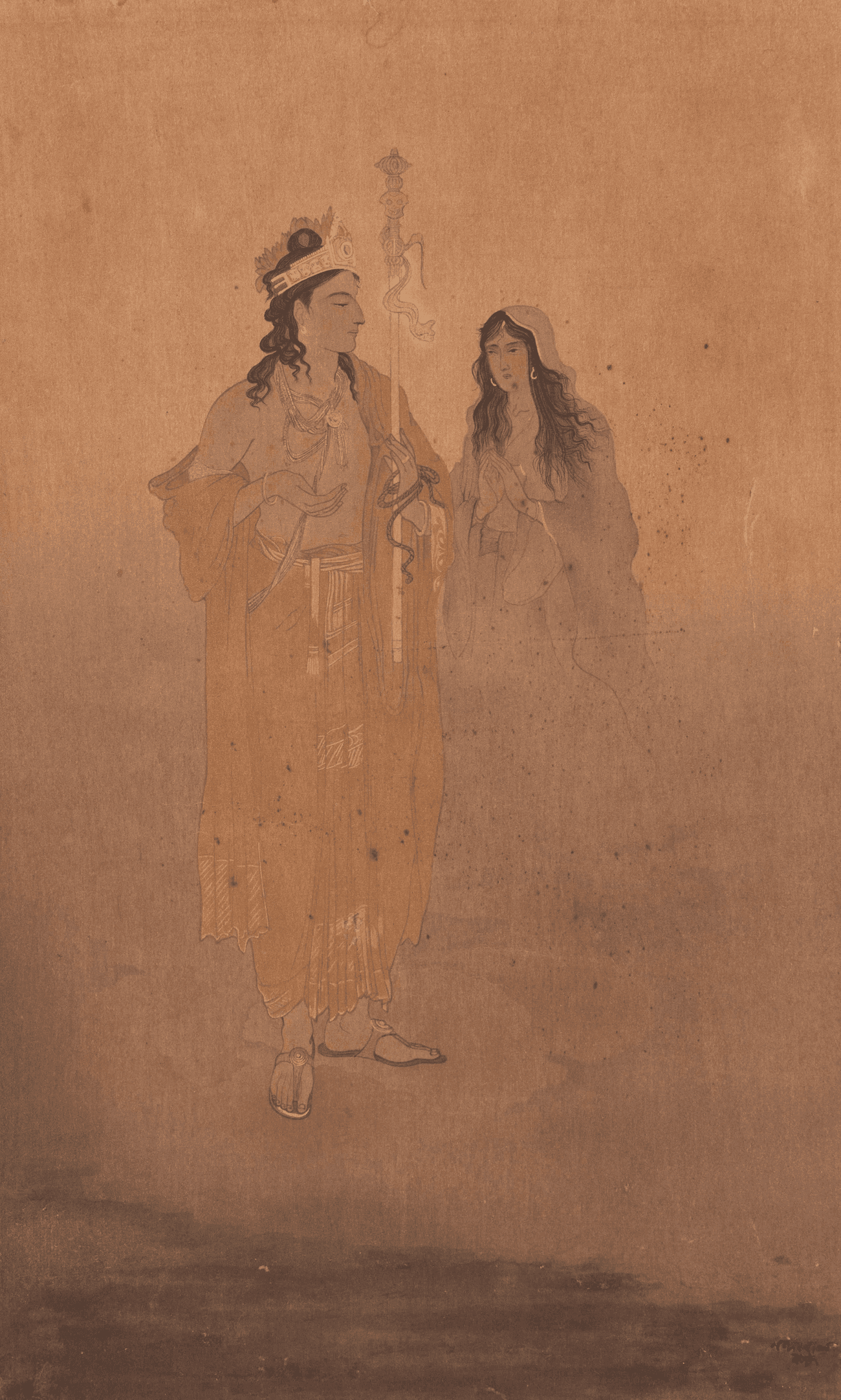
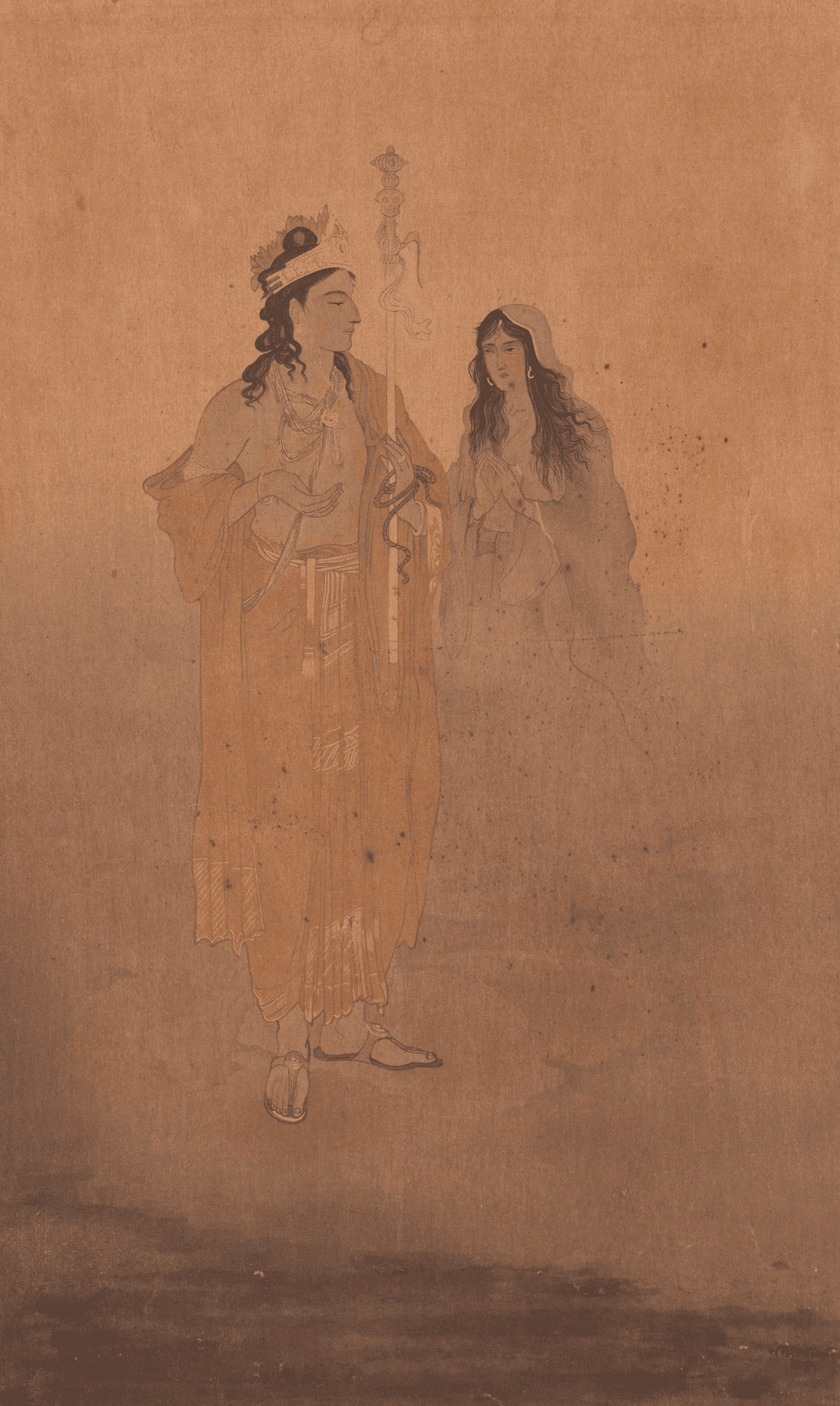
Nandalal Bose
Nandalal Bose
Nandalal Bose
Nandalal Bose (1882-1966) was born in Munger, Bihar, and trained under Abanindranath Tagore at the Government School of Art in Calcutta. A leading figure of the Bengal School, he later became closely associated with Visva-Bharati University, where he headed Kala Bhavana.
Bose’s practice drew from Indian classical, folk, and East Asian traditions, developing a distinctive visual language marked by lyrical line, subtle colour, and a strong sense of rhythm. His work spanned painting, printmaking, and mural, often engaging with themes of mythology, rural life, and the cultural ethos of India.
He is regarded as a foundational figure in modern Indian art, particularly for shaping an indigenous artistic identity in the early 20th century.
Nandalal Bose (1882-1966) was born in Munger, Bihar, and trained under Abanindranath Tagore at the Government School of Art in Calcutta. A leading figure of the Bengal School, he later became closely associated with Visva-Bharati University, where he headed Kala Bhavana.
Bose’s practice drew from Indian classical, folk, and East Asian traditions, developing a distinctive visual language marked by lyrical line, subtle colour, and a strong sense of rhythm. His work spanned painting, printmaking, and mural, often engaging with themes of mythology, rural life, and the cultural ethos of India.
He is regarded as a foundational figure in modern Indian art, particularly for shaping an indigenous artistic identity in the early 20th century.

Nandalal Bose
Untitled
Kokka woodblock print on paper
8.5 x 7.0 in.

Nandalal Bose
Untitled, 1936
Drypoint on paper
6.5 x 5.5 in.

Nandalal Bose
Untitled (Savitri and Yama)
Japanese woodblock print
highlighted with gold pigment
13.0 x 8.0 in.