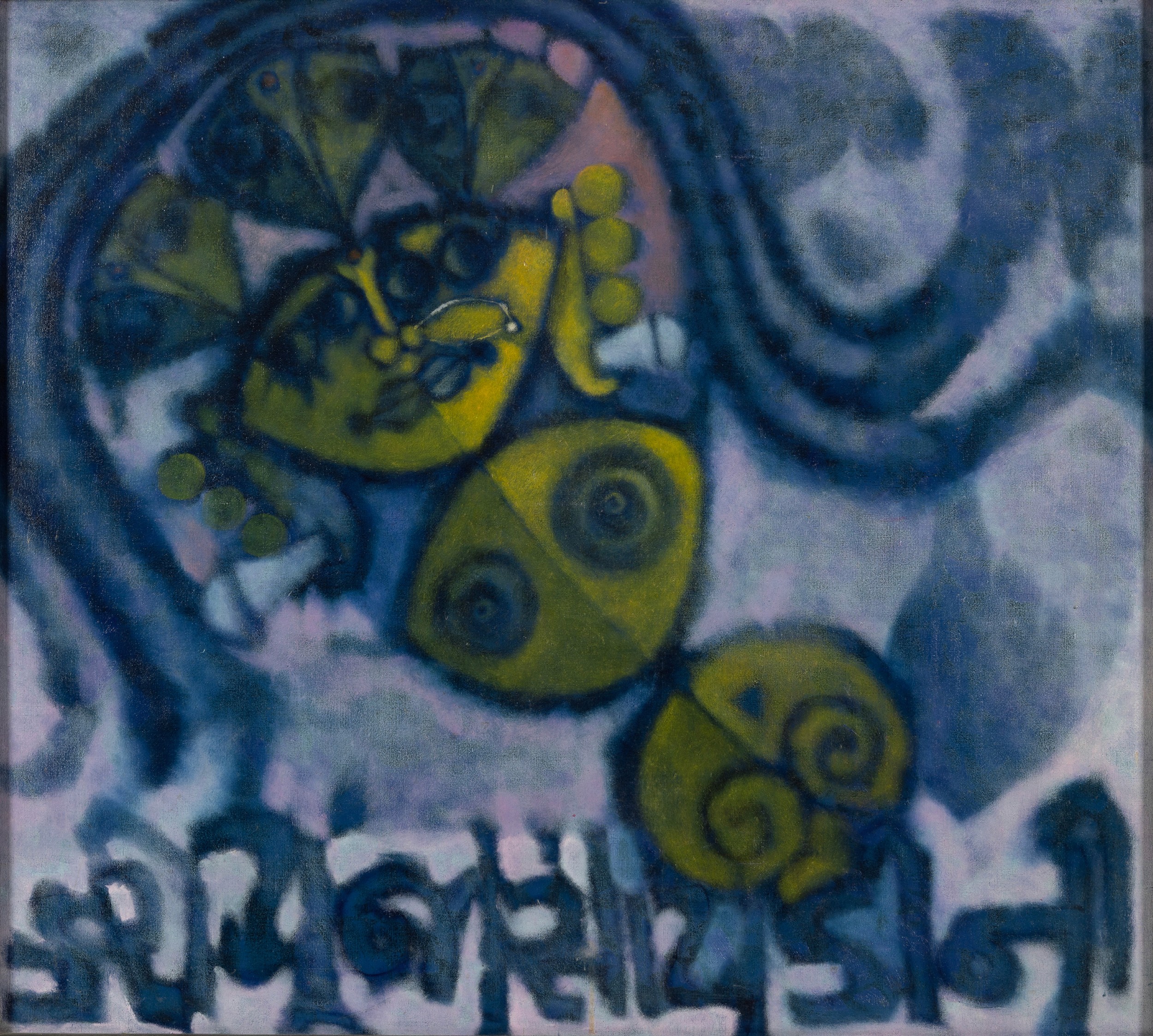
J. Sultan Ali
J. Sultan Ali
J. Sultan Ali
J. Sultan Ali (1920-1990) was born in Bombay and studied at the Sir J. J. School of Art. His practice developed into a highly individual visual language that brought together elements of calligraphy, symbolism, and abstraction.
Deeply influenced by Sufi philosophy and literary traditions, Sultan Ali’s works often feature sparse, linear figures and script-like forms that evoke a sense of introspection and spiritual inquiry. His compositions are marked by restraint, rhythm, and an emphasis on gesture rather than detailed representation.
He is regarded as a distinctive voice in Indian modern art, known for merging text, image, and philosophy into a contemplative and poetic visual form.
J. Sultan Ali (1920-1990) was born in Bombay and studied at the Sir J. J. School of Art. His practice developed into a highly individual visual language that brought together elements of calligraphy, symbolism, and abstraction.
Deeply influenced by Sufi philosophy and literary traditions, Sultan Ali’s works often feature sparse, linear figures and script-like forms that evoke a sense of introspection and spiritual inquiry. His compositions are marked by restraint, rhythm, and an emphasis on gesture rather than detailed representation.
He is regarded as a distinctive voice in Indian modern art, known for merging text, image, and philosophy into a contemplative and poetic visual form.

J. Sultan Ali
Drushta–Vijaya (Triumph of Virtue over Evil), 1972
Ink on paper
22.0 x 30.0 in.
J. Sultan Ali
Drushta–Vijaya (Triumph of Virtue over Evil), 1972
Ink on paper
22.0 x 30.0 in.

J. Sultan Ali
Untitled (Gopi), 1972
Ink on paper
15.0 x 22.0 in.

J. Sultan Ali
Sringari - Nagini, 1986
Oil on canvas
32.0 x 35.5 in.

J. Sultan Ali
Gajendra Nath, 1974
Ink on paper
11.0 x 15.0 in.

J. Sultan Ali
Untitled, 1987
Watercolour and ink on paper
17.5 x 21.5 in.

J. Sultan Ali
Bhayanaka Ballad, 1989
Graphite, pastel and ink on paper
7.2 x 9.7 in.