Amrita Sher-Gil
Amrita Sher-Gil
Amrita Sher-Gil
Amrita Sher-Gil (1913-1941) was born in Budapest to a Sikh father and a Hungarian mother, and trained at the École des Beaux-Arts in Paris, where she absorbed the influence of European modernism. Her early work reflects this engagement, but a return to India in the mid-1930s marked a decisive shift in her practice.
Turning her attention to the lives of ordinary people, particularly women, Sher-Gil developed a visual language defined by simplified forms, muted palettes, and a quiet emotional intensity. Travels across regions such as South India deepened this engagement, resulting in some of her most significant works.
Despite her brief career, Sher-Gil’s work laid the foundation for a modern Indian sensibility in painting, and she remains one of its most influential figures.
Amrita Sher-Gil (1913-1941) was born in Budapest to a Sikh father and a Hungarian mother, and trained at the École des Beaux-Arts in Paris, where she absorbed the influence of European modernism. Her early work reflects this engagement, but a return to India in the mid-1930s marked a decisive shift in her practice.
Turning her attention to the lives of ordinary people, particularly women, Sher-Gil developed a visual language defined by simplified forms, muted palettes, and a quiet emotional intensity. Travels across regions such as South India deepened this engagement, resulting in some of her most significant works.
Despite her brief career, Sher-Gil’s work laid the foundation for a modern Indian sensibility in painting, and she remains one of its most influential figures.

Amrita Sher-Gil
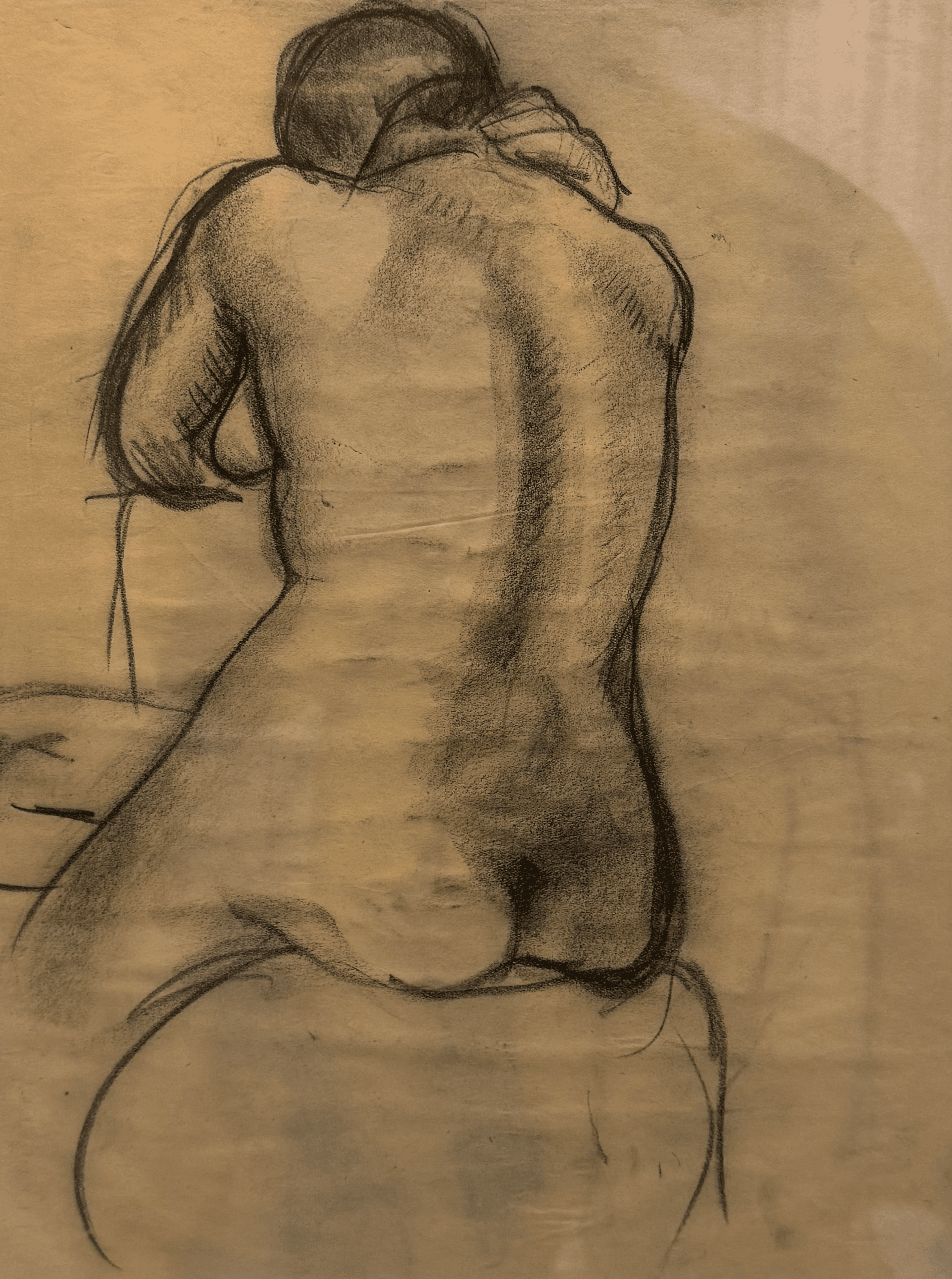
Untitled (Sketch)
Charcoal on Paper
11 X 14 in.
Amrita Sher-Gil
Untitled (Sketch)
Charcoal on Paper
11 X 14 in.

Amrita Sher-Gil
Untitled (Sketch)
Charcoal on Paper
11 X 14 in.